
CCNP ENCOR Multicast Explained: PIM, IGMPv2/IGMPv3, ASM, SSM, RP, and RPF
1. Introduction: why multicast matters in enterprise networks
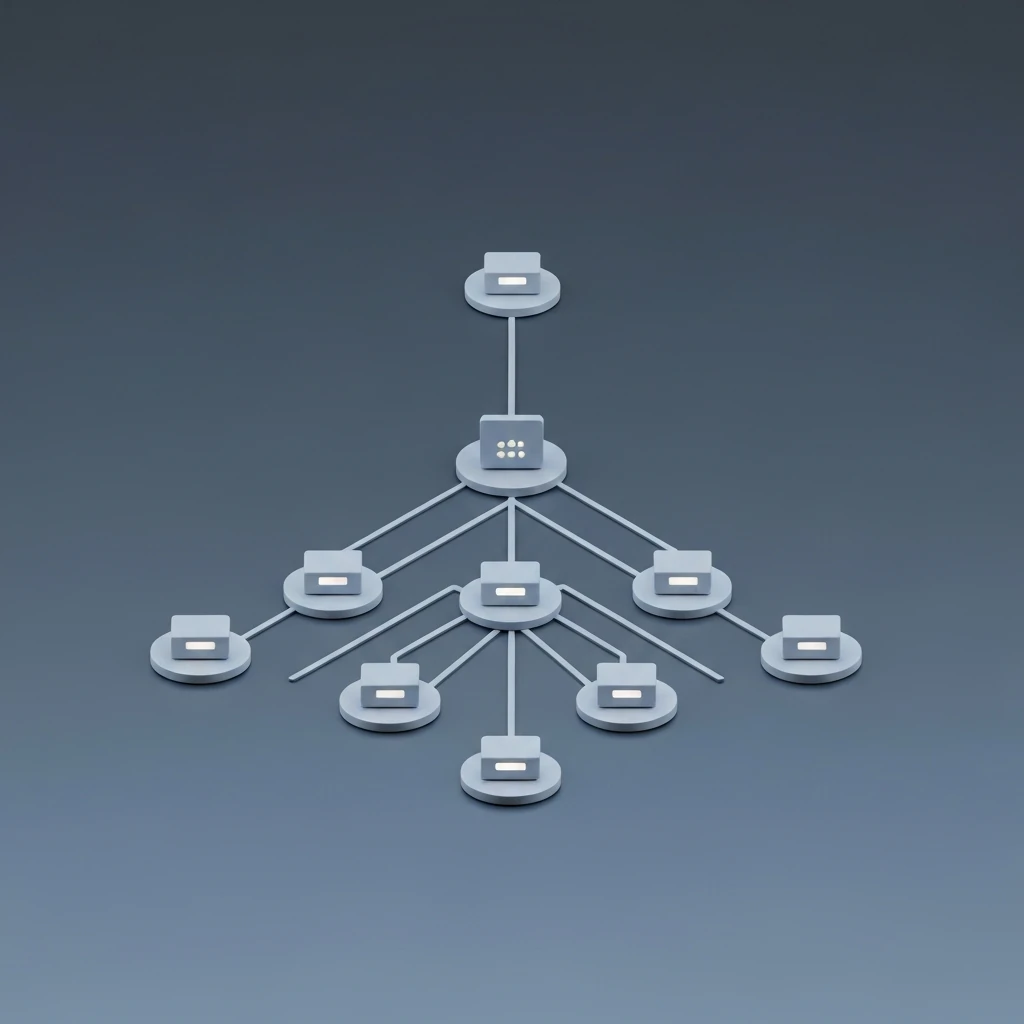
Multicast is handy when one sender has to deliver the same stream to a bunch of receivers without chewing up bandwidth by blasting duplicate copies everywhere. So instead of building a separate unicast stream for every client, multicast lets the network do the replication only where there are actual listeners. That’s why you’ll see it pop up in IPTV, market data feeds, software distribution, training video, and digital signage.
For CCNP ENCOR, multicast matters because it ties together host signaling, router control-plane behavior, unicast routing, and Layer 2 switching into one end-to-end workflow. Once you can line up IGMP, PIM, the RP, and RPF in your head, multicast stops feeling so mysterious and starts looking like a pretty logical forwarding process.
This article is IPv4-focused because the exam objective explicitly references PIM and IGMP v2/v3. And just so there’s no confusion, in IPv6 the host membership protocol is MLD, not IGMP.
2. Traffic delivery models: unicast, broadcast, and multicast
Unicast is basically one-to-one traffic. One sender is talking to one receiver. That works fine for most client-server traffic, but it falls apart quickly when hundreds of receivers all need the exact same content.
Broadcast is one-to-all within a Layer 2 broadcast domain, whether anyone wants the traffic or not. Every host in the VLAN gets the frame whether it wants it or not. Broadcast is handy for limited local discovery, but it’s definitely not a good content-delivery model.
Multicast is one-to-many, but only for receivers that’ve actually asked for it. Hosts join a multicast group, the local router learns there’s interest on the subnet, and the network builds forwarding state so the packets only go where they’re needed.
| Delivery Model | Relationship | Efficiency with Many Receivers | Typical Use |
|---|---|---|---|
| Unicast | One-to-one | Poor | Web, SSH, client-server apps |
| Broadcast | One-to-all in VLAN | Poor | ARP, limited discovery |
| Multicast | One-to-many for joined receivers | High | IPTV, feeds, training streams |
Exam anchor: broadcast ignores receiver intent; multicast is receiver-driven.
3. Multicast addressing: the basics
IPv4 multicast lives in 224.0.0.0/4, which you’ll still hear people call Class D. The big thing to remember is that these addresses identify multicast groups, not a specific host. The source is still a normal unicast address, while the multicast address tells the network which group should get the traffic.
Several ranges matter for ENCOR:
- 224.0.0.0/24 - link-local control groups. These are not forwarded by routers. For example, OSPF uses 224.0.0.5 and 224.0.0.6, and PIM uses 224.0.0.13.
- 232.0.0.0/8 - IPv4 SSM destination range. This is the multicast group range commonly used for Source-Specific Multicast.
- 239.0.0.0/8 - administratively scoped multicast. This is similar in intent to private scoping, but not identical to RFC 1918 behavior. Traffic does not contain itself automatically; boundaries or filters must be configured.
One subtle but really important point is that 239/8 only gives you control if you actually enforce the scope with multicast boundaries, ACLs, or policy. Just choosing an address from 239.0.0.0/8 doesn’t magically stop it from being routed.
Multicast also has to map down to Layer 2, and that’s where things get a little messy. IPv4 multicast addresses map to Ethernet multicast MAC addresses in the 01:00:5e:xx:xx:xx range. Only 23 bits of the IPv4 multicast address are used in that mapping, so more than one multicast group can end up sharing the same Ethernet MAC address. That imperfect mapping is one of the main reasons switches benefit so much from IGMP snooping instead of just flooding multicast frames across the whole VLAN.
| Range | Purpose | Forwarded by Routers? |
|---|---|---|
| 224.0.0.0/24 | Local control / link-local groups | No |
| 232.0.0.0/8 | SSM destination groups | Yes |
| 239.0.0.0/8 | Administratively scoped groups | Yes, unless boundaries are configured |
4. Core multicast forwarding concepts
Multicast forwarding is based on distribution trees and forwarding state. The main roles you really need to keep straight are:
- FHR - first-hop router, the router closest to the source
- LHR - last-hop router, the router closest to the receivers
- OIL - outgoing interface list, the interfaces where traffic should be replicated
- (*,G) - shared-tree state for any source sending to group G
- (S,G) - source-tree state for source S sending to group G
The multicast routing table, viewed with show ip mroute, is the control-plane and forwarding-state view that tells the router which interface is incoming and which downstream interfaces are in the OIL.
Multicast relies heavily on unicast routing. PIM is protocol independent because it does not run its own best-path algorithm. Instead, it uses the existing routing information to do reverse-path checks. In ENCOR terms, it helps to think of multicast as a specialized forwarding system that sits on top of the unicast topology.
Also, don’t forget that control-plane state and actual traffic flow aren’t the same thing. A router can have (*,G) or (S,G) state even when no packets are currently arriving, and a route entry with an empty OIL means there is no downstream forwarding.
I like to think of the forwarding path as a chain of roles: the source sends traffic to the first-hop router, the traffic moves across the transit path or toward the RP, reaches the last-hop router, passes through an access switch using IGMP snooping, and then finally gets delivered to the host.
5. Reverse Path Forwarding, or RPF
RPF is the multicast loop-prevention rule, and it’s absolutely central to how multicast stays sane. When a multicast packet shows up, the router basically asks, “If I were trying to reach this source using normal unicast routing, which interface would I use to get there?” If the packet arrives on that interface, it passes the RPF check; if it doesn’t, the router drops it. If it comes in on any other interface, the router drops it.
For ENCOR, the usual rule is that RPF is based on the unicast routing table. In more advanced designs, static mroutes or multicast-specific routing information can influence RPF, but the exam expectation is the unicast route lookup model.
There is an important distinction between ASM shared-tree and source-tree logic:
- For
(*,G)state in ASM, RPF is toward the RP. - For
(S,G)state, RPF is toward the source.
That distinction explains many troubleshooting cases. A router can have working shared-tree state but fail when it tries to move to the shortest path tree because the source RPF path is wrong.
Useful commands:
show ip rpf <source-ip>show ip mroute
So if the best route to source 10.10.10.10 points out Gi1/0/1, multicast from that source has to arrive on Gi1/0/1 or it isn’t passing RPF. Asymmetric routing, route changes, policy-based routing side effects, ECMP differences, or just plain bad static routes can all trigger RPF failures.
6. IGMP, or host-to-router multicast signaling
IGMP is the IPv4 protocol hosts use to tell their local router that they want multicast traffic. That distinction matters because IGMP isn’t what routers use to build the routed multicast tree. PIM handles the signaling between routers instead.
Hosts use IGMP to tell the local multicast router that they want traffic for a specific group. The LHR uses that information to decide whether it should ask upstream for the multicast traffic. On the subnet, the router sends queries so it can learn whether receivers are still present.
Common IGMP message types include:
- General Query - asks which groups still have listeners on the subnet
- Group-Specific Query - checks whether listeners remain for one group
- Group-and-Source-Specific Query - used with IGMPv3 for source-aware checks
- Membership Report - sent by hosts to join or report interest
- Leave Group - used in IGMPv2 to indicate departure
Querier election also matters. Among the multicast-router-capable devices on the subnet, the one with the lowest IP address becomes the IGMP querier. If no queries are present, membership state can age out and multicast delivery can fail.
7. IGMPv2 operation
IGMPv2 supports group joins, leaves, and router queries. A host joins by sending a membership report for group G. The router periodically sends general queries. When a host leaves, it can send a leave message, and the querier can send group-specific queries to check whether any listeners remain.
IGMPv2 is group-based, not source-based. It tells the router, “I want group G,” but not, “I want source S for group G.” That makes IGMPv2 a natural fit for ASM rather than SSM.
At a deeper operational level, IGMP behavior includes timers, query intervals, and last-member query processing that affect leave latency. Older IGMP behavior also included report suppression concepts on shared media, though in switched enterprise networks that is less operationally visible than it once was.
| Feature | IGMPv2 | IGMPv3 |
|---|---|---|
| Group joins | Yes | Yes |
| Leaves | Yes | Yes |
| Source filtering | No | Yes |
| Best fit | ASM | SSM and advanced filtering |
8. IGMPv3 and source filtering
IGMPv3 adds source awareness. A host can specify source filters using:
- INCLUDE - accept traffic only from listed sources
- EXCLUDE - accept traffic from all but listed sources
In practice, SSM relies on INCLUDE behavior. A receiver effectively says, “I want source 198.51.100.10 for group 232.1.1.1.” That is a source-specific join.
For IPv4 enterprise host-based SSM joins, IGMPv3 is typically required. That is the exam-safe statement. In specialized environments, proxies or application-specific mechanisms may be involved, but CCNP-level expectations treat IGMPv3 as the host-side signaling protocol for SSM.
IGMPv3 also has compatibility considerations. Mixed-version environments can operate, but the effective behavior on a segment may be influenced by the lowest common version and by the querier version. That is one reason multicast troubleshooting on older mixed networks can get messy.
9. PIM overview: router-to-router multicast signaling
PIM is the protocol routers use to signal multicast state to each other. PIM forms adjacencies on interfaces where PIM is enabled, not just on interfaces that happen to be carrying multicast traffic. On IPv4 segments, PIM Hello messages are sent to 224.0.0.13.
PIM does use several message types, but the ones that matter most for ENCOR are these:
- Hello - discovers and maintains PIM neighbors
- Join/Prune - requests or removes multicast forwarding state
- Register / Register-Stop - used in ASM between the source side and the RP
- Assert - helps resolve duplicate forwarding on multiaccess segments
PIM must be enabled on all routed interfaces in the multicast path, not just on the receiver VLAN and source VLAN. If one transit hop lacks PIM, the tree can break even when unicast routing is fine.
10. PIM modes and service models
PIM Dense Mode uses flood-and-prune behavior. Traffic is initially flooded and then pruned from branches without receivers. That model is legacy and generally not recommended in modern enterprise design.
PIM Sparse Mode uses explicit joins. Traffic flows only where receivers exist. This is the practical enterprise default.
PIM Sparse-Dense Mode is also legacy and may be reduced, deprecated, or unsupported on newer platforms and software. Treat it as a migration-era feature, not a recommended design choice.
One exam distinction is essential: SSM is not a separate PIM mode. In Cisco enterprise design, both ASM and SSM commonly run over PIM Sparse Mode semantics. The difference is the service model:
- ASM uses an RP and can start on a shared tree
- SSM uses direct
(S,G)joins and does not require an RP
11. PIM DR election and multiaccess behavior
On multiaccess LANs, PIM elects a Designated Router (DR). The DR has special responsibilities:
- On the receiver side, it is the primary router that processes IGMP membership information for building joins upstream.
- On the source side in ASM, it is the router that sends PIM Register messages toward the RP.
That means DR election matters operationally. If the wrong router becomes DR, or if first-hop redundancy and multicast behavior are not aligned, source registration or receiver join handling can become inconsistent.
Do not confuse the PIM DR with the IGMP querier. They are different roles, though in many simple networks the same device performs both functions.
12. ASM packet flow: end-to-end
ASM allows receivers to join a group without specifying a source. Because receivers do not initially know the source, ASM uses a Rendezvous Point.
The packet walk is:
- A host joins group G with IGMP.
- The LHR creates
(*,G)state and sends a PIM Join toward the RP. - A source starts sending to group G.
- The source-side DR/FHR creates source state and encapsulates the first packets in PIM Register messages to the RP.
- The RP learns about source S for group G and may build state toward the source.
- Traffic begins flowing down the shared tree toward joined receivers.
- If policy and traffic conditions allow, the LHR may switch from shared-tree
(*,G)behavior to source-tree(S,G)behavior. - Once the RP has a native path to the source, it can send Register-Stop to the FHR so native forwarding is used instead of continual registration encapsulation.
This is the precise ASM behavior that candidates often blur. The RP is not just a conceptual meeting point; it is central to source registration and initial shared-tree forwarding.
13. RP discovery and redundancy
An RP can be learned in several ways:
- Static RP - simple and deterministic, often best for small controlled environments
- Auto-RP - Cisco proprietary, useful historically but less attractive in multivendor or modern standards-based designs
- BSR - standards-based Bootstrap Router method
Redundancy matters because an RP outage affects new joins and new source registrations in ASM. Existing source-tree flows may continue, but new session establishment can fail.
Anycast RP is a common high-availability concept. In classic IPv4 ASM designs, Anycast RP usually requires MSDP between the RPs so they can share source information. That is beyond the deepest ENCOR implementation detail, but it is worth knowing because Anycast RP often appears as a design answer and many engineers forget the MSDP dependency in classic ASM designs.
RP placement should be topologically sensible. A badly placed RP can create inefficient shared-tree paths and unnecessary latency before SPT switchover.
14. SPT and multicast optimization
The shared tree is useful for ASM startup, but it may not be the best path. The Shortest Path Tree provides direct source-to-receiver forwarding. On Cisco platforms, the LHR can switch from (*,G) to (S,G) based on traffic and policy.
Why switch? Better path efficiency, lower latency, and less dependence on the RP for steady-state forwarding. The tradeoff is more (S,G) state in the network.
A common exam interpretation rule is:
(*,G)usually indicates shared-tree behavior(S,G)indicates source-specific forwarding state- Both may coexist during transition
Cisco tuning can influence switchover, for example with SPT threshold policy such as ip pim spt-threshold. Some designs intentionally delay or prevent switchover to control state scale, though that is more of a design topic than a core exam memorization item.
15. SSM packet flow: end-to-end
SSM is simpler because the receiver knows the source in advance. There is no RP, no shared tree, and no Register/Register-Stop process.
- The host sends an IGMPv3 INCLUDE report for source S and group G.
- The LHR creates
(S,G)state immediately. - The LHR sends a PIM Join directly toward the source, following the RPF path to S.
- Each upstream router installs
(S,G)state. - Traffic flows directly from source to receiver along the source tree.
This is why SSM is operationally attractive. It removes the RP dependency, reduces ambiguity about allowed sources, and simplifies troubleshooting.
16. ASM vs SSM comparison
| Feature | ASM | SSM |
|---|---|---|
| Receiver knows source? | Not required | Yes |
| RP required? | Yes | No |
| Initial tree | Shared tree toward RP | Direct source tree |
| Host signaling | Group join | Typically IGMPv3 source-specific join |
| Operational complexity | Higher | Lower |
Design rule: if the application supports known-source delivery, SSM is usually preferred. It reduces attack surface and operational complexity, though it does not itself provide authentication or encryption.
17. Layer 2 multicast support: IGMP snooping and queriers
IGMP snooping is a Layer 2 feature, not a Layer 3 multicast routing protocol. It listens to IGMP control traffic so the switch can forward multicast frames only to ports that have interested receivers.
Without snooping or other multicast controls, many switches flood multicast traffic within the VLAN, especially for unknown multicast. That is not identical on every platform, but the operational risk is the same: unnecessary traffic reaches ports that do not need it.
Snooping depends on membership visibility over time. That usually means one of two things must exist in the VLAN:
- a multicast router port receiving IGMP queries from an L3 interface, or
- an IGMP snooping querier on the switch in pure Layer 2 VLANs
If no queries exist, snooping entries can age out and receivers stop getting traffic even though the routed multicast core is fine. This is a classic failure domain.
Also distinguish:
- IGMP querier - Layer 3 router function on the subnet
- IGMP snooping querier - Layer 2 switch feature used when no multicast router is present
Wireless networks add another wrinkle because multicast over Wi-Fi may be rate-limited, converted, or handled specially by the WLAN infrastructure. The routed multicast design can be correct while wireless delivery is still inefficient.
18. Cisco implementation examples
A minimally correct Cisco IOS XE multicast baseline usually starts with global multicast enablement:
ip multicast-routing
Basic ASM example:
ip multicast-routing ip pim rp-address 10.10.10.10 interface GigabitEthernet1/0/1 ip address 10.1.12.1 255.255.255.0 ip pim sparse-mode interface GigabitEthernet1/0/2 ip address 10.1.23.2 255.255.255.0 ip pim sparse-mode interface Vlan20 ip address 10.20.20.1 255.255.255.0 ip pim sparse-mode ip igmp version 2
Basic SSM example:
ip multicast-routing ip pim ssm range 232.0.0.0/8 interface GigabitEthernet1/0/1 ip address 10.1.12.1 255.255.255.0 ip pim sparse-mode interface GigabitEthernet1/0/2 ip address 10.1.23.2 255.255.255.0 ip pim sparse-mode interface Vlan30 ip address 10.30.30.1 255.255.255.0 ip pim sparse-mode ip igmp version 3
Key implementation rule: enable PIM on every routed interface in the multicast path. Also remember that exact commands and output can vary by platform, software release, and Catalyst architecture.
19. Verification commands and output interpretation
| Command | Purpose |
|---|---|
show ip igmp groups | Shows learned IGMP group membership on the router |
show ip igmp interface | Shows IGMP version, querier, and interface behavior |
show ip pim neighbor | Verifies PIM adjacencies |
show ip pim interface | Verifies PIM is enabled on the correct interfaces |
show ip pim rp mapping | Verifies RP mapping for ASM groups |
show ip mroute | Shows multicast state, incoming interface, and OIL |
show ip rpf <source-ip> | Shows RPF interface and upstream neighbor toward source |
show ip igmp snooping groups | Shows Layer 2 snooping group membership on switches |
show ip igmp snooping querier | Verifies snooping querier state where supported |
Example show ip mroute interpretation:
(10.10.10.10, 232.1.1.1), 00:05:12/00:02:47, flags: T Incoming interface: GigabitEthernet1/0/1, RPF nbr 10.1.12.2 Outgoing interface list: Vlan30, Forward/Sparse, 00:05:12/00:02:47
Read it like this: source 10.10.10.10 to group 232.1.1.1 is arriving on the correct incoming interface, the RPF neighbor is 10.1.12.2, and traffic is being forwarded out Vlan30.
20. Troubleshooting workflow and common failure domains
A good multicast workflow starts at the receiver and moves upstream:
- Is the application actually multicast-capable and joined to the right group?
- Is multicast routing globally enabled with
ip multicast-routing? - Does the LHR show IGMP membership?
- Is there an IGMP querier or snooping querier on the VLAN?
- Are PIM neighbors up on every routed hop?
- If ASM, is the RP mapping correct and reachable?
- Does the router have the expected
(*,G)or(S,G)state? - Does
show ip rpfpoint to the correct upstream path? - Is source traffic actually being sent?
- Does the access switch show snooping membership or mrouter ports?
| Symptom | Likely Cause | Check |
|---|---|---|
| No receivers shown | Host/app issue, wrong VLAN, IGMP version mismatch | show ip igmp groups |
| Receivers present, no upstream tree | PIM missing on transit link, no neighbors | show ip pim neighbor |
| ASM joins fail | Bad RP mapping or RP unreachable | show ip pim rp mapping |
| Tree exists, traffic dropped | RPF failure | show ip rpf |
| Core looks fine, host gets nothing | Snooping/querier problem | show ip igmp snooping groups |
| ASM starts but source registration fails | DR/Register issue, RP path issue | PIM DR role, RP reachability |
One high-value failure example: the receiver has joined, PIM neighbors are up, and show ip mroute exists, but no traffic is forwarded. show ip rpf <source> reveals the expected upstream interface is Gi1/0/1 while packets arrive on Gi1/0/2. That is an RPF failure caused by unicast path asymmetry, not a PIM adjacency problem.
Also check for ACLs, firewalls, or control-plane filters blocking IGMP or PIM. A network can have perfect addressing and routing but still fail because protocol messages never pass.
21. Security and design considerations
Multicast has security implications. In ASM, any source can potentially send to a group unless you add controls. SSM reduces unwanted-source exposure because receivers request a specific source, but it does not provide encryption, identity verification, or application-layer security by itself.
Useful controls include:
- group-range filtering and multicast boundaries
- administratively scoped addressing with enforced boundaries
- control-plane policing for IGMP and PIM
- limiting multicast only to interfaces where it is actually needed
- choosing SSM where applications support it
From a scaling perspective, multicast state matters. Large numbers of groups and sources increase control-plane load and forwarding-table usage. ASM can add RP load and shared-tree complexity. SSM often scales more cleanly because it removes the RP and shared-tree startup behavior.
In campus and WAN design, multicast saves bandwidth only if the end-to-end path supports it correctly. The network cannot turn an arbitrary unicast application into a multicast application. The sender and receivers must actually use multicast.
22. Exam traps and final summary
What the exam expects you to know:
- IGMP = host-to-router
- PIM = router-to-router
- 224.0.0.0/24 = link-local, not routed
- 232.0.0.0/8 = IPv4 SSM group range
- 239.0.0.0/8 = administratively scoped
- ASM requires an RP
- SSM does not require an RP
- PIM Sparse Mode underlies both ASM and SSM in common enterprise designs
- IGMPv3 is typically required for IPv4 host-side SSM signaling
- RPF uses the unicast path in normal ENCOR examples
- RPT/shared tree = usually (*,G)
- SPT/source tree = (S,G)
- IGMP snooping is Layer 2 optimization, not routed multicast
Common traps:
- Confusing IGMP with PIM
- Thinking SSM is a separate PIM mode
- Forgetting that RP applies only to ASM
- Assuming multicast ignores unicast routing
- Ignoring the need for a querier in snooping environments
- Forgetting
ip multicast-routingin Cisco configuration
Final packet-path summary: the host signals interest with IGMP, the LHR builds local membership state, PIM creates router-to-router tree state, RPF validates the upstream path, and IGMP snooping constrains Layer 2 delivery. In ASM, the RP helps connect sources and receivers through shared-tree behavior before possible SPT switchover. In SSM, the receiver joins a specific source and group, and the network builds a direct source tree with no RP dependency. If you can explain that sequence clearly, you understand multicast at the level ENCOR expects.